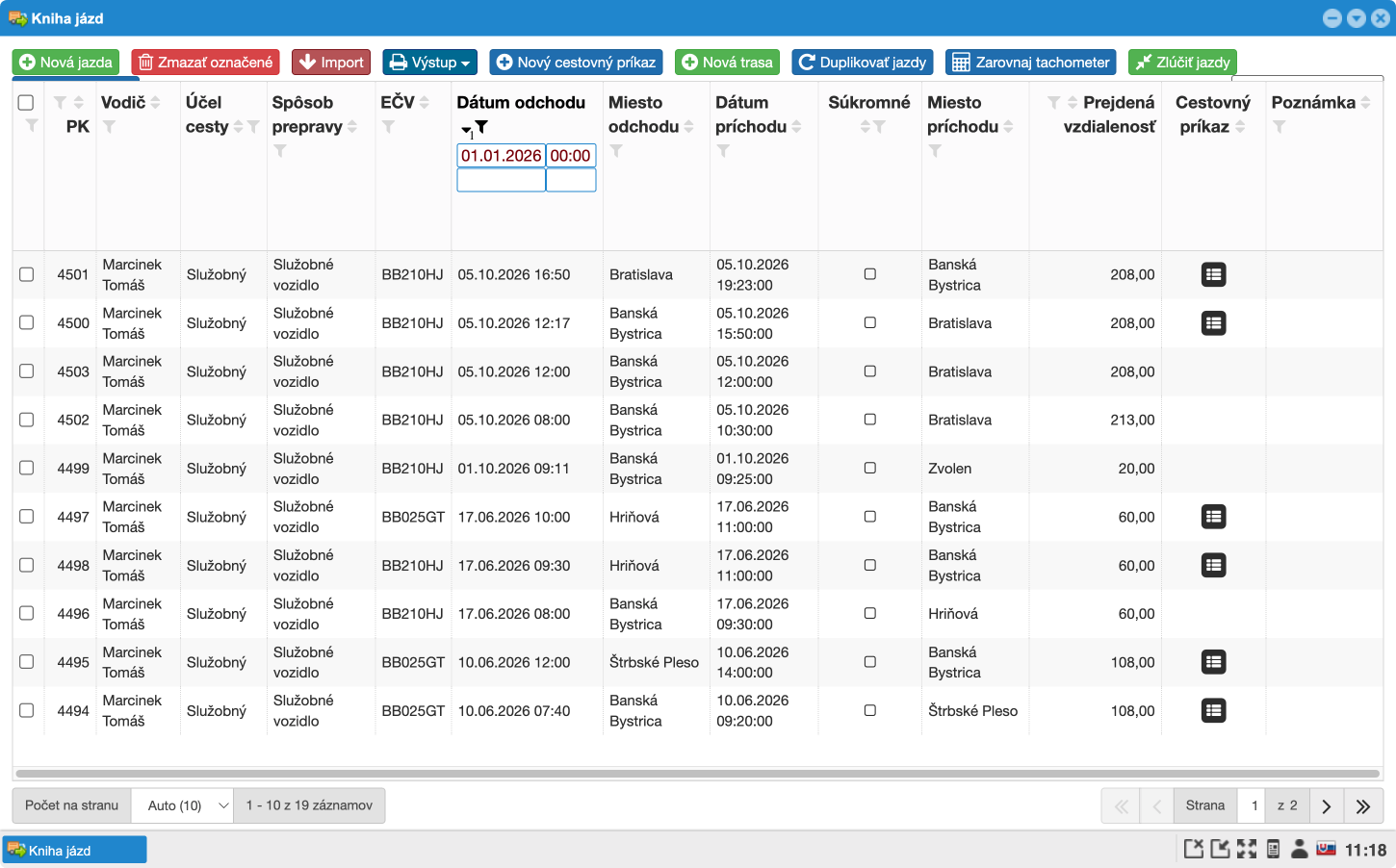







Only 50% VAT deduction
Without a logbook, you’ll only claim half the cost for your car, fuel, servicing and maintenance.
LOG BOOK webDrive
Get rid of paperwork and meet the requirements for 100% VAT deduction on company vehicles.






What you need to know
An amendment to the VAT Act tightens the rules on VAT deductions for company cars. You can only claim the full tax deduction if you use an electronic logbook.
Without a logbook, you’ll only claim half the cost for your car, fuel, servicing and maintenance.
The non-deductible portion is treated as a non-taxable expense for income tax purposes.
Without electronic records, it is difficult to prove the actual use of a vehicle.
Required information
During an inspection, you must provide clear evidence of every journey. webDrive It records all mandatory data.
VIN, registration number and vehicle type.
At the beginning and end of the tax period.
Date, time, route, mileage, purpose of journey and driver.
Fuel, servicing, repairs and maintenance.
How it works
Journeys, refuelling and reports are always ready for inspection.
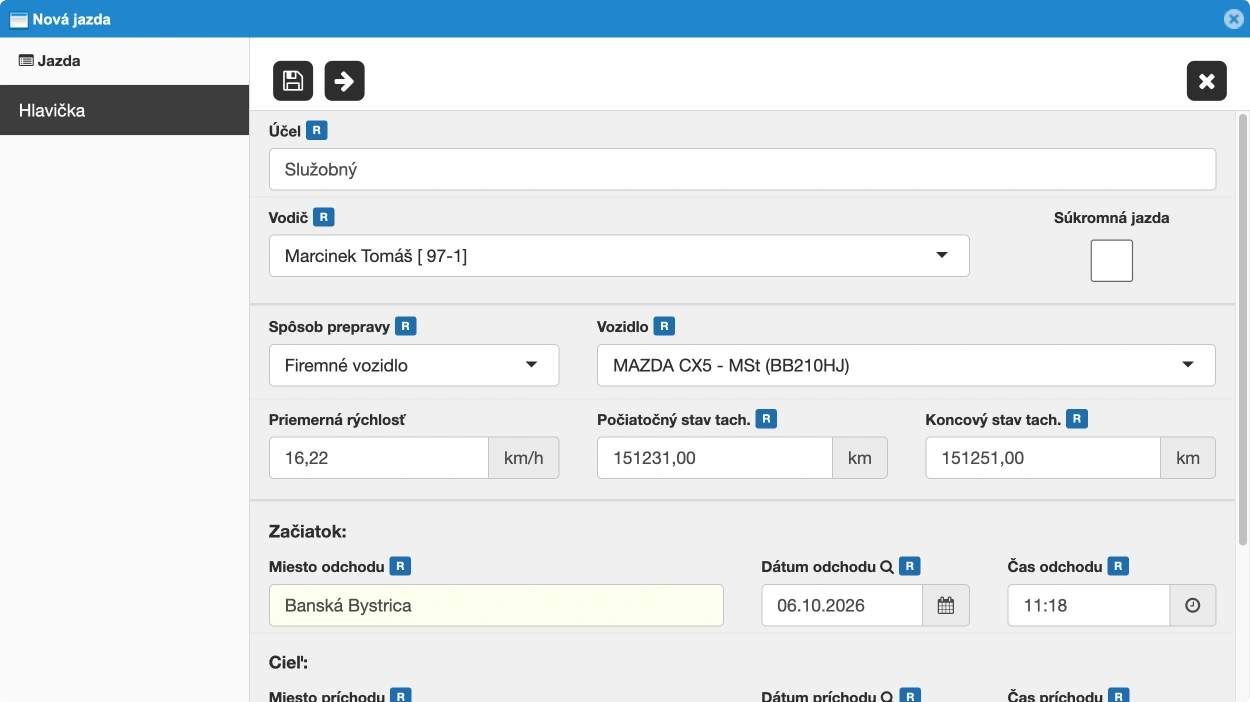
Complies with the requirements of the amendment to the VAT Act from 2026
Manual journey logging
GPS-based journey tracking
Vehicle and refuelling records
Automatic mileage calculation
Most visited locations and saved routes
Export to PDF and Excel
99.98% availability in the cloud
Mobile and PC applications
Private journeys recorded separately
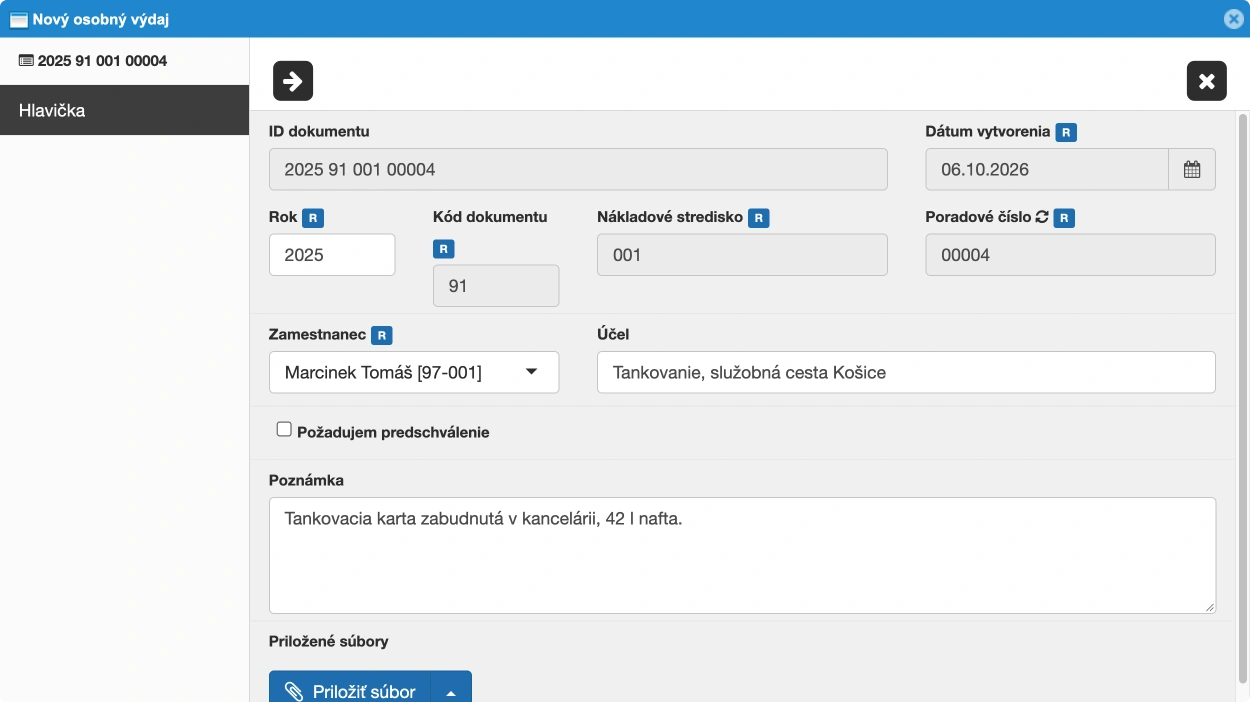
Travel authorisations and expense claims inwebDrive
Integration with the webVisitor time and attendance system
Questions and Answers
What the amendment brings and how to prepare for a tax audit.
Yes. If you wish to claim a full VAT deduction on private vehicles, you will need an electronic journey log from 1 January 2026. Without it, only 50 per cent will automatically be allowed.
Excel is technically acceptable provided it meets all mandatory requirements and is updated on an ongoing basis. In practice, however, it can be problematic during audits, particularly when it comes to proving chronological order, verifying journeys and linking them to refuelling records.
Key details include the purpose of the journey, route, date and time, odometer reading before and after the journey, mileage and driver. Audits require complete data with no gaps or additional notes.
Tax authorities routinely compare the actual route length, the logic behind journeys and whether journeys correspond to working hours or refuelling stops. Non-standard routes must be accompanied by a clear explanation.
Yes, but separately. If you also use the vehicle for private purposes, you can only claim a 50% VAT deduction.
Ideally, this should be done immediately after the journey ends. Records added retrospectively appear unreliable and, where there are a large number of journeys, may raise doubts about the accuracy of the data.
Yes. Fuel consumption, mileage and refuelling frequency are among the key checks. If the journey records and refuelling records do not match, this is a typical reason for a tax assessment.
Most commonly in PDF or Excel format. Readability, chronological order and the inability to edit the data retrospectively without leaving a trace are essential. The export must contain all mandatory data.
Ideally with GPS records, a meeting calendar or a brief description in the logbook. The checks focus primarily on journeys outside working hours, long routes and journeys that deviate from the usual pattern.
Didn't find what you were looking for?
obchod@apis.sk
Please leave us your contact details and we will prepare A bespoke solution for you.
Cookie consent
We use essential cookies to run the website and, with your consent, analytics and marketing cookies (Google Analytics, Meta Pixel) to learn how to improve it. More in our privacy policy.